5-Minute Habit Ideas That Actually Stick
Short on time? These 5-minute habit ideas are backed by science and easy to fit into any schedule. Start small, build momentum.
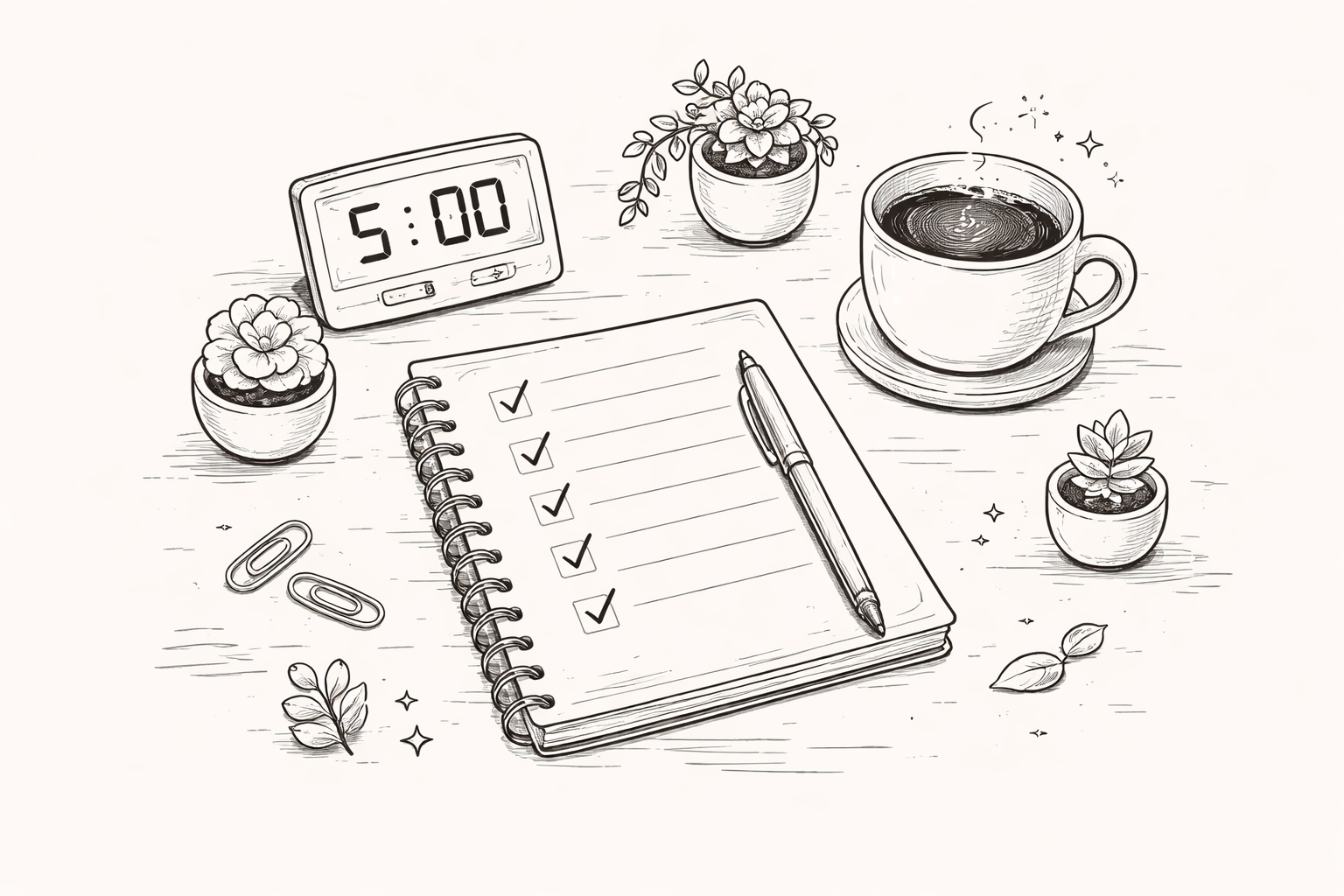
We've all been there: you want to build better habits, but life is busy, energy is limited, and the idea of overhauling your entire routine feels exhausting before you even start. Here's the good news — science says you don't need to. In fact, some of the most powerful habit changes in the world start with just five minutes a day.
This isn't about cutting corners. It's about understanding how habits actually form in the brain — and using that knowledge to your advantage. Whether you're trying to move more, read more, stress less, or simply feel more in control of your day, five minutes is enough to get the ball rolling.
Why 5 Minutes Is More Powerful Than You Think
Habit formation is driven by a neurological loop: cue → routine → reward. Every time you repeat a behavior, the neural pathway associated with it gets a little stronger. Researchers at MIT found that this loop is mediated by the basal ganglia — a part of the brain that thrives on repetition and pattern recognition. The key insight? The brain doesn't care how long the routine is. It cares that it happened.
A 2010 study published in the European Journal of Social Psychology found that it takes an average of 66 days for a new behavior to become automatic — but what matters most is consistency, not duration. Starting small dramatically lowers the activation energy needed to get started, which means you're far more likely to actually do it.
The hardest part of any habit isn't maintaining it — it's starting. Five-minute habits remove the mental barrier and let momentum do the rest.
5-Minute Habit Ideas Across Every Area of Life
Here's a collection of bite-sized habits organised by life area. Pick one that resonates with you right now — don't try to start them all at once.
🧠 Mind & Mental Clarity
- Morning brain dump: Write down 3 things on your mind before checking your phone. Clears mental clutter instantly.
- Gratitude micro-journal: Name one specific thing you appreciated yesterday. Research shows this rewires the brain toward positivity over time.
- 5-minute meditation: Apps like Headspace report that even 5 minutes of guided meditation reduces perceived stress by up to 14% after just a week.
- Worry window: Set a 5-minute timer and write down everything you're anxious about. Then close the notebook. You've contained it.
💪 Movement & Body
- Desk mobility routine: A quick sequence of neck rolls, shoulder circles, and hip flexor stretches — great for anyone sitting all day.
- 5-minute walk after meals: A 2022 study in Sports Medicine found that a short post-meal walk significantly reduces blood sugar spikes.
- Micro-workout snack: 10 push-ups, 10 squats, 10 jumping jacks. Done. That's a habit worth stacking.
- Stretch before sleep: Even 3–5 minutes of light stretching signals to the nervous system that it's time to wind down.
📚 Learning & Growth
- Read one article: Save long reads to Pocket or Instapaper and commit to one article with your morning coffee.
- Vocabulary builder: Learn one new word a day. In a year, that's 365 words you didn't have before.
- Podcast snippet: Play 5 minutes of an educational podcast during your commute or while doing dishes.
- Skill practice: 5 minutes of a language app, a typing tutor, or a music app. Small practice compounds fast.
🏡 Home & Environment
- The 5-minute tidy: Set a timer and put things back where they belong. You'll be amazed what this does for your mental state.
- Tomorrow's prep: Lay out your outfit, pack your bag, or prep your lunch the night before. Future you will be grateful.
- Inbox zero sprint: Delete, archive, or reply to emails for exactly 5 minutes. Stop when the timer goes off.
💬 Relationships & Connection
- Send one kind message: A text, a voice note, or a DM to someone you haven't talked to in a while. Connection doesn't need to be long.
- Active listening check-in: Ask one genuine question and actually listen to the answer. No phones, no distractions.
- Express appreciation: Tell someone — a colleague, partner, or friend — one specific thing you appreciate about them.
How to Make 5-Minute Habits Stick
Even tiny habits need a little structure to survive real life. Here are the principles that make the biggest difference:
- Anchor it to something existing. Habit stacking — attaching a new habit to an existing routine — is one of the most researched strategies in behavioral science. "After I pour my morning coffee, I will write three things I'm grateful for."
- Make it obvious. Put your journal on your pillow. Put your running shoes by the door. Environment design reduces reliance on willpower.
- Track your streak. Seeing a visual chain of completed days creates a powerful psychological pull to not break it. This is exactly why apps like SideQuest (sidequestdaily.com) use streaks and gamification — it works.
- Celebrate immediately. Give yourself a small moment of satisfaction right after completing the habit — a fist pump, a smile, marking it done. This cements the reward loop.
- Start embarrassingly small. If five minutes still feels like too much on some days, that's fine — do it for two. The habit happening at all is more important than how long it takes.
"You don't rise to the level of your goals. You fall to the level of your systems." — James Clear, Atomic Habits
The SideQuest Approach: Habits as Daily Quests
One reason so many people struggle with habits isn't lack of motivation — it's that the process feels dry and disconnected from any real sense of progress. That's the philosophy behind sidequestdaily.com: making daily habit-building feel like an adventure, not a chore.
Each day, SideQuest gives you a small, achievable micro-quest — something you can complete in just a few minutes. You earn points, build streaks, and unlock new challenges as you go. It's habit science wrapped in the kind of engagement loop that games have used for decades. And it works: users who engage with gamified habit systems show significantly higher long-term adherence than those using plain checklists.
Key Takeaways
- 5 minutes is genuinely enough to start building a habit — consistency beats duration every time.
- The brain forms habits through repetition regardless of how long the behavior lasts.
- Habit stacking (anchoring to existing routines) dramatically increases success rates.
- Visual tracking, streaks, and small rewards leverage your brain's natural reward circuitry.
- Gamified habit tools like SideQuest make the process more engaging and sustainable.
- Start with one habit, not ten. Build the skill of habit-building before scaling up.
Can 5-minute habits really make a long-term difference?
Yes — and the science backs it up. Habit formation is about neural pathway reinforcement, which happens through repetition, not duration. A 5-minute daily habit done consistently for 66 days becomes automatic. The key is to keep going even on the days it feels pointless, because that's exactly when the neural wiring is happening.
What's the best 5-minute habit to start with?
The best one is the one you'll actually do. That said, a morning brain dump or gratitude journal is a great first habit because it sets a positive tone for the day and requires nothing but a pen and paper. If you're more physically inclined, a post-meal walk is scientifically proven and easy to anchor to an existing routine.
How do I stop forgetting to do my new habit?
Environment design is your best friend. Put a physical cue where you'll see it — a book on your desk, shoes by the door, your journal on your pillow. You can also use a habit tracking app like SideQuest (sidequestdaily.com) to send gentle reminders and keep your streak alive.
Is it better to do habits in the morning or evening?
It depends on the habit and your lifestyle. Morning habits benefit from high willpower and a fresh mental state. Evening habits benefit from the wind-down routine anchor. The most important thing is that the timing is consistent — your brain learns to expect the habit at that time of day, which makes it easier to maintain.
What if I miss a day? Does that ruin everything?
Not at all. Research by Phillippa Lally (the same researcher who studied the 66-day habit formation timeline) found that missing one day has no significant impact on long-term habit formation. What matters is that you don't miss two days in a row. One miss is an accident; two misses is the start of a new habit (not doing it). Get back on it the next day.
How many 5-minute habits should I try to build at once?
Start with just one. This sounds overly simple, but it's the advice virtually every behavioral scientist agrees on. Building a habit is itself a skill — you're learning to be someone who follows through. Master one habit first, then layer in the next. SideQuest's daily quest format is designed exactly around this principle: one small win at a time.
Ready to build better habits?
Sidequest turns micro-habits into daily 5-minute quests. One-time purchase, no subscription.
Download on the App Store